 Thailand
Learning STEM by Solving Real Problems
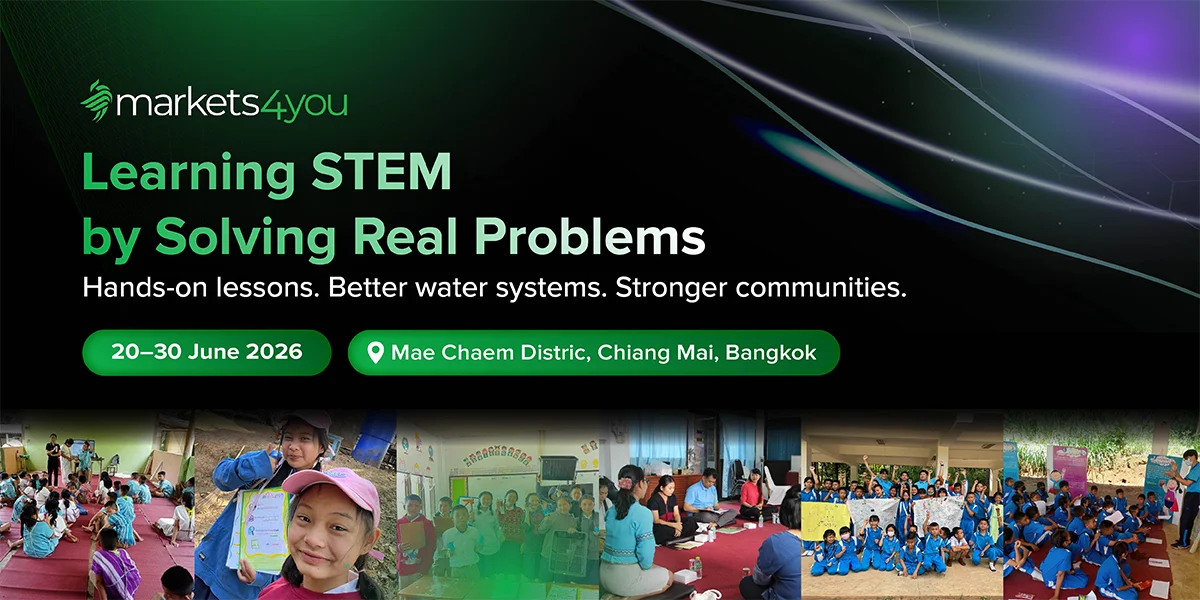
The lead teachers designed activities that connected real-life problems with the Active Learning approach, encouraging students to learn through hands-on practice, analytical thinking, designing, and developing their own solutions according to the STEM Education process.
The activity began with students conducting field surveys and measuring water quality from water sources near the school to study environmental conditions and assess basic water quality. Students then worked together to analyze the causes of water-related problems and explore possible solutions. They learned the principles of basic water filtration through experiments and the design of simple filtration systems, enabling them to understand scientific concepts related to water resource management.
Teachers further extended the learning process through a mini-project in which students designed and created a DIY grease trap using easily available materials that could be practically applied. Students collaboratively planned, designed, tested, improved, and installed the grease trap with a wastewater drainage system from the school cafeteria. This project helped reduce grease contamination before wastewater was released into the environment and demonstrated the application of science, technology, engineering, and mathematics knowledge to solve real problems within the school.
The implementation of the activities showed that students were enthusiastic about learning and were able to analyze problems, plan, and work collaboratively in a systematic manner. They developed skills in design, problem-solving, communication, and presentation. Furthermore, students gained a deeper understanding of water conservation and wastewater management in their daily lives.
This activity reflects an effective integration of STEM Education by using real-world situations as a foundation for learning. It enabled students to connect knowledge with practical applications and create simple innovations to address problems in their own community. In addition, the activity helped cultivate awareness of natural resources and environmental conservation while encouraging students to recognize that learning is not limited to memorizing content, but is a process of developing thinking skills, taking action, and discovering their own potential. These experiences allow students to apply their knowledge to daily life and contribute to sustainable community development.


