Government Shutdown Chaos Delays Jobs & CPI Data: Dow Smashes 50,000 as Bitcoin Crashes to $60K
Market Sentiment Overview
Markets experienced extreme bifurcation as a partial US government shutdown delayed critical January NFP and CPI data until next week, creating an information vacuum that sent equities surging while Bitcoin crashed to $60,000. The Dow Jones Industrial Average exploded through 50,000 for the first time ever, surging 1,206 points (+2.47%) Friday to close at 50,115 in a spectacular rally led by cyclicals like Caterpillar (+7%) and Goldman Sachs (+4%). However, Bitcoin collapsed to three-year lows, down 30% in three consecutive weekly losses with $4.85 billion in liquidations, while Strategy reported a $12.4 billion Q4 loss and MSTR stock plunged 77% from 2025 highs. The Dollar recovered to 97.35 from 95.50 lows on the “Warsh trade,” EUR/USD pulled back to 1.1814, and GBP/USD slipped to 1.3608 as the dovish BoE (5-4 vote to hold) weighed on Sterling. Gold recovered toward $5,000 after touching $4,400, settling at 4,966 following CME margin hikes and violent commodity volatility. The week ahead features Wednesday’s delayed January NFP report and Friday’s January CPI—both critical for Fed rate cut expectations.
Currencies
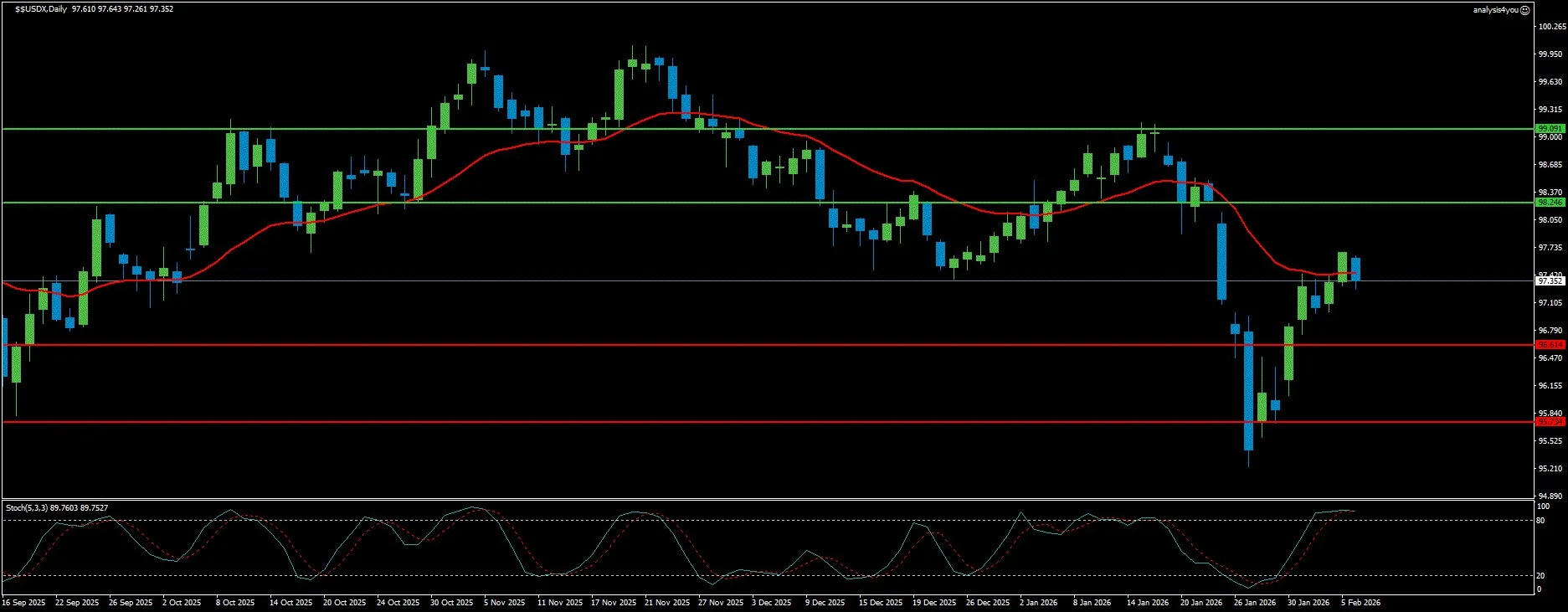
USD Index: “Warsh Trade” Recovery From Four-Year Lows (97.35)
Current Trend: Recovering (Volatile) Market Sentiment: Cautiously Positive
The Dollar Index recovered to 97.35 from the 95.50 four-year lows hit January 27, benefiting from the “Warsh trade” narrative despite the information blackout caused by the partial government shutdown. The Bureau of Labor Statistics announced Monday it would not release January employment or CPI data due to funding lapse, creating an unprecedented vacuum just as markets needed clarity on Fed policy direction. Markets priced in the Kevin Warsh nomination as potentially hawkish-leaning despite voting record favoring aggressive easing (seeking “more than a full percentage point” of cuts annually). Fed speakers remained divided—Stephen Miran (Board Governor, voter) pushed for 100+ bps of cuts, while Lisa Cook (Board Governor, voter) expressed more concern about stalled inflation progress than labor market weakness. Tom Barkin (Richmond, non-voter) struck a measured tone expecting resilience into 2026, while Mary Daly (San Francisco, non-voter) warned the low-hiring environment could quickly deteriorate. The government shutdown was resolved Wednesday when Trump signed funding for most agencies through September, though DHS remains funded only until February 13. Dollar shorts were trimmed to 4.4K contracts (two-week lows) with open interest rising to 31.8K, suggesting fresh participants entering despite cautious sentiment. Critical resistance at 98.25 must break to target 99.09 and the 200-day SMA around 98.60.
Resistance: 98.25 | 99.09
Support: 96.61 | 95.73
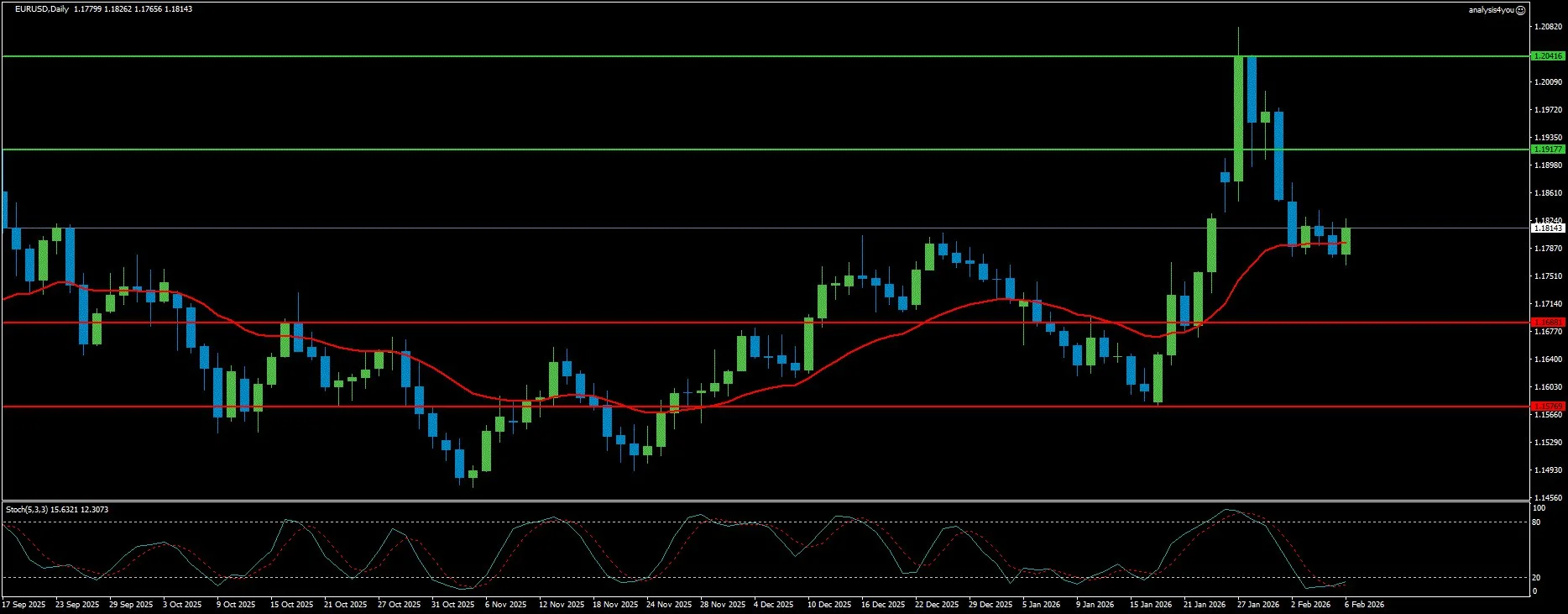
EUR/USD: Data Vacuum Weighs Despite Encouraging Fundamentals (1.1814)
Current Trend: Neutral to Bullish (Correcting) Market Sentiment: Cautious
EUR/USD settled at 1.1814 after peaking at 1.2082, unable to attract speculative interest despite encouraging Eurozone data and EU trade deal victories. The Hamburg Commercial Bank upwardly revised January Manufacturing PMI to 49.5 (still contraction), while Services PMI was downwardly revised to 51.6. Critically, Eurostat reported January HICP fell to 1.7% YoY from 1.9% (December), below the ECB’s 2% target, with core HICP steady at 2.3%. The ECB held rates unchanged Thursday for the fifth consecutive meeting (deposit facility 2.00%, main refinancing 2.15%, marginal lending 2.40%), maintaining its “we’re in a good place” rhetoric with President Lagarde reiterating no exchange rate target but acknowledging a stronger Euro could bring inflation below target. Geopolitically, the EU demonstrated defiance by signing major trade deals with India (after 20 years of negotiations) and Mercosur, responding to Trump’s persistent tariff threats. The US data blackout created uncertainty that prevented EUR gains despite fundamentals. Support at 1.1688 and 1.1577 should hold barring hawkish NFP/CPI surprises next week, while resistance at 1.1918 must clear to challenge 1.2042 and the January peak.
Resistance: 1.1918 | 1.2042
Support: 1.1688 | 1.1577
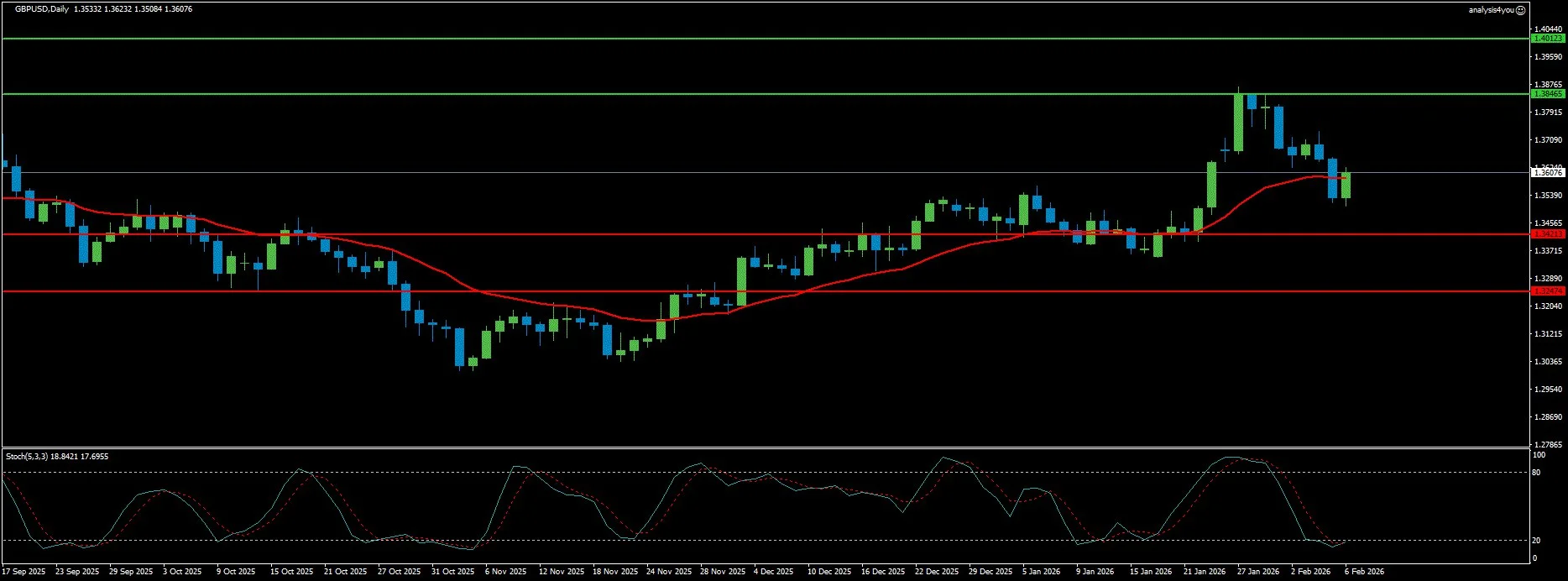
GBP/USD: Dovish BoE Smashes Sterling From Four-Year Highs (1.3608)
Current Trend: Correcting (Still Bullish Medium-Term) Market Sentiment: Mixed
GBP/USD tumbled nearly 200 pips from four-year highs at 1.3870 to 1.3608 as the Bank of England delivered a shockingly dovish hold decision. The BoE maintained rates at 3.75% but the 5-4 vote split sent Sterling plunging—four MPC members voted for an immediate 25 bps cut amid expectations of “sharp drops in inflation in coming months.” Governor Bailey’s Sunday appearance and Chief Economist Huw Pill’s Friday fireside chat are now critical for gauging March rate cut probability. US labor data showed profound weakness—ADP private sector added just 22K jobs (vs 48K expected, down from revised 37K), JOLTS openings fell to 6.542M from revised 6.928M, and Initial Claims spiked to 231K from 209K. ISM Services PMI held at 53.8 (beating 53.5 expected), but ISM Manufacturing Employment rose to 48.1 from 44.9 (still contraction). The data mix suggests labor market deterioration that would normally support Sterling, but the dovish BoE overwhelmed fundamentals. Technical support at 1.3421 (61.8% Fibonacci) held firm, with the Golden Cross (50-day above 200-day) still intact and suggesting further upside once consolidation completes. Resistance at 1.3846 blocks the path to 1.4012.
Resistance: 1.3846 | 1.4012
Support: 1.3421 | 1.3247
Stocks
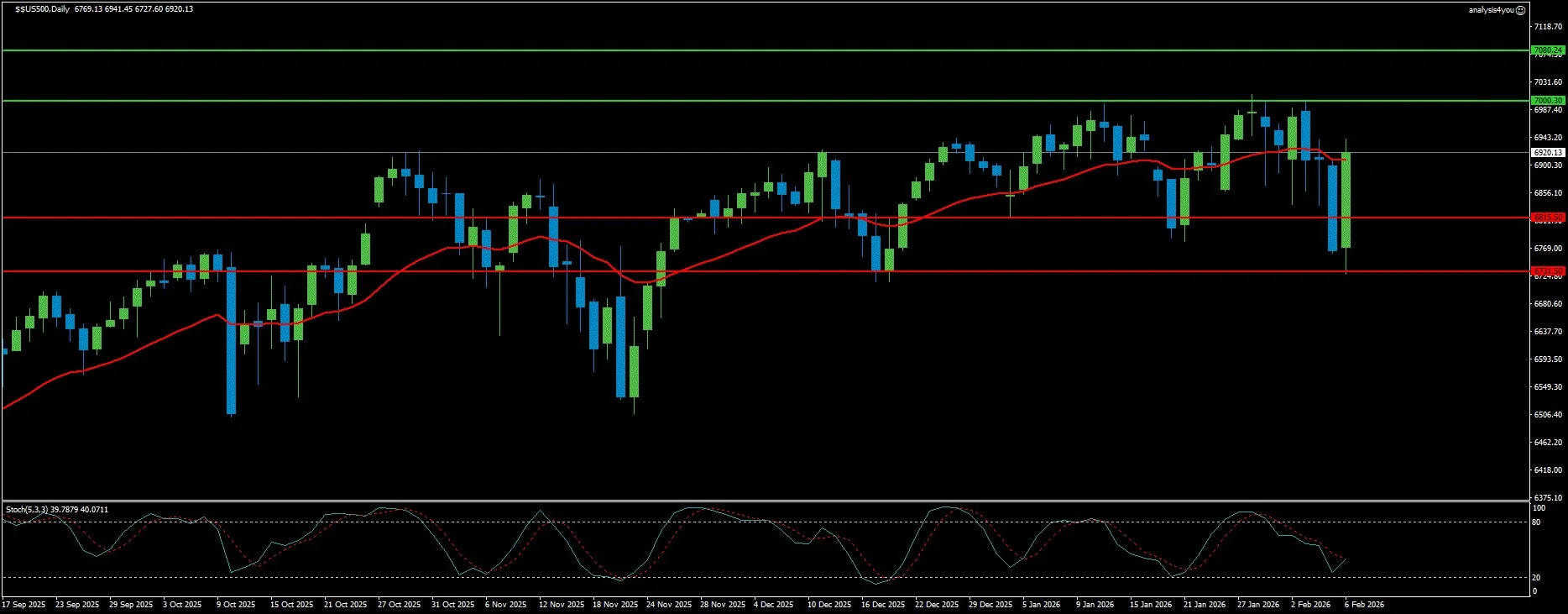
S&P 500 & Dow: Cyclical Surge as Dow Smashes 50,000 (S&P 6,920 | Dow 50,115)
Current Trend: Bifurcated Rally Market Sentiment: Risk-On for Cyclicals, Tech Stress
US equities delivered a spectacular Friday surge despite ending the week mixed overall. The Dow exploded 1,206 points (+2.47%) to smash through 50,000 for the first time ever, closing at 50,115 and gaining 2.5% for the week. The S&P 500 jumped 1.97% Friday to 6,932 but still lost 0.1% weekly, while the Nasdaq advanced 2.18% Friday to 23,031 but fell 1.8% for the week. The divergence reflects a dramatic “great recalibration” from growth into value, with cyclicals leading—Caterpillar surged 7%, Goldman Sachs +4%, GE Aerospace +5%, Boeing +3%, Delta +7%, United +8%. The Russell 2000 rallied 3.6% Friday, up over 7% YTD, signaling broadening rally expectations from Trump’s “Big Beautiful Bill” fiscal stimulus ahead of midterms. Technology showed violent volatility—software stocks cratered on AI disruption fears (Anthropic’s Claude Cowork legal/finance capabilities), with ServiceNow remaining weak despite Friday bounce. Amazon crashed 5% after missing Q4 EPS ($1.95 vs $1.97) and guiding to $200B capex for 2026. However, Friday saw rotation back into chips—Nvidia +8%, Broadcom +6%, AMD +8%, TSML +4%. The VIX plunged below 20 to 17.76 after spiking to 20+ Thursday. Remarkably, 66 S&P 500 stocks hit 52-week highs Friday including Hilton, Coca-Cola, Exxon, J&J, Delta, Northrop Grumman, with only 11 hitting lows.
S&P Resistance: 7,000 | 7,080 S&P
Support: 6,815 | 6,731
Commodities
Gold: Violent Volatility Then Recovery Toward $5,000 (4,966)
Current Trend: Recovering (Volatile) Market Sentiment: Cautiously Bullish
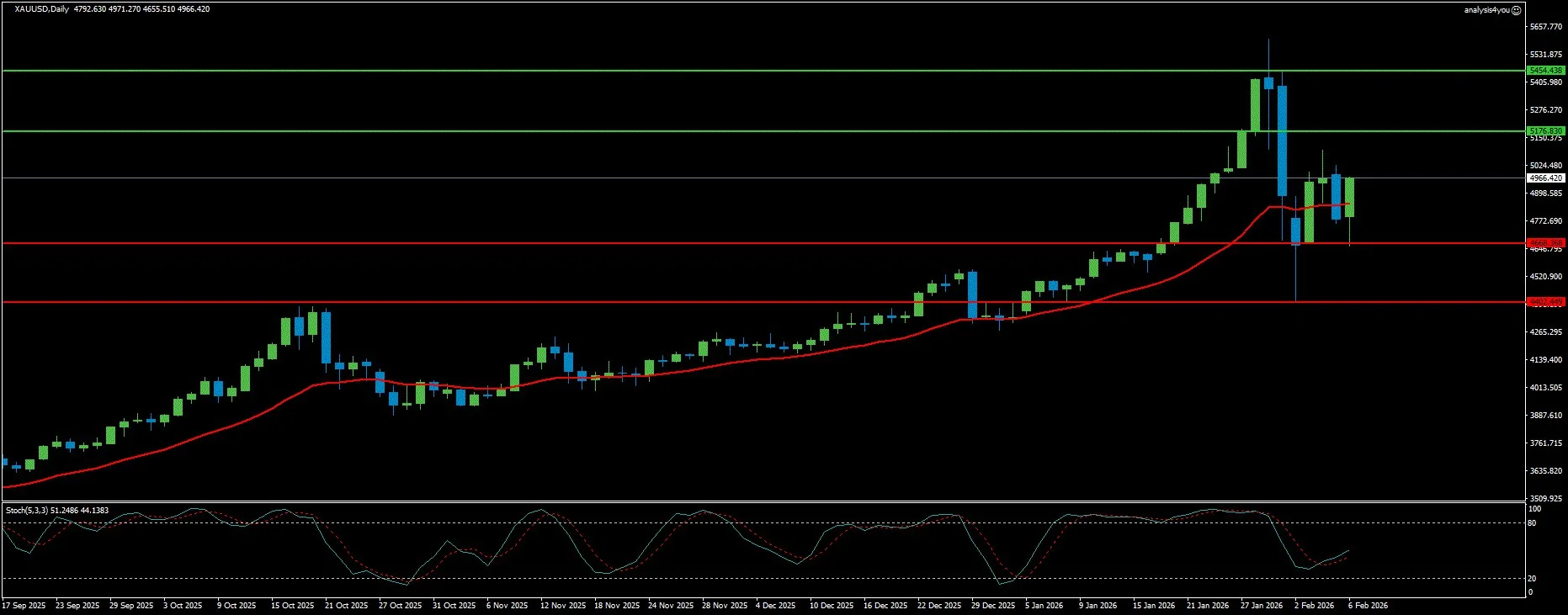
Gold experienced its most violent week in years, plunging 8% to touch $4,400 Monday (early January lows) on the Warsh nomination sell-off before staging a spectacular 6% rebound Tuesday. The precious metal then lost nearly 4% Thursday before recovering Friday to settle at 4,966, just shy of the psychological $5,000 level. The CME raised margin requirements on Gold and Silver futures late Thursday amid heightened volatility, ironically helping prices rebound as forced selling eased. Silver crashed nearly 20% in a single day Thursday in a deleveraging event analysts called a “reset not a collapse.” BNY’s Bob Savage noted nearly $1 billion in outflows from China Gold ETFs, highlighting “how fragile sentiment remains” despite the rally having become “overstretched.” The BoE and ECB delivered dovish messages that should support Gold—BoE’s 5-4 vote split signals March cut potential, while ECB acknowledged stronger EUR could bring inflation below target. However, stock market rotation into safe-haven assets and the US data blackout created uncertain conditions. Support at 4,668 should hold barring major geopolitical de-escalation or hawkish US data, with resistance at 5,176 and 5,454 as next targets.
Resistance: 5,176 | 5,454
Support: 4,668 | 4,402
WTI Crude Oil: Iran Dialogue Hopes Continue Pullback (65.49)
Current Trend: Consolidating Market Sentiment: Cautious
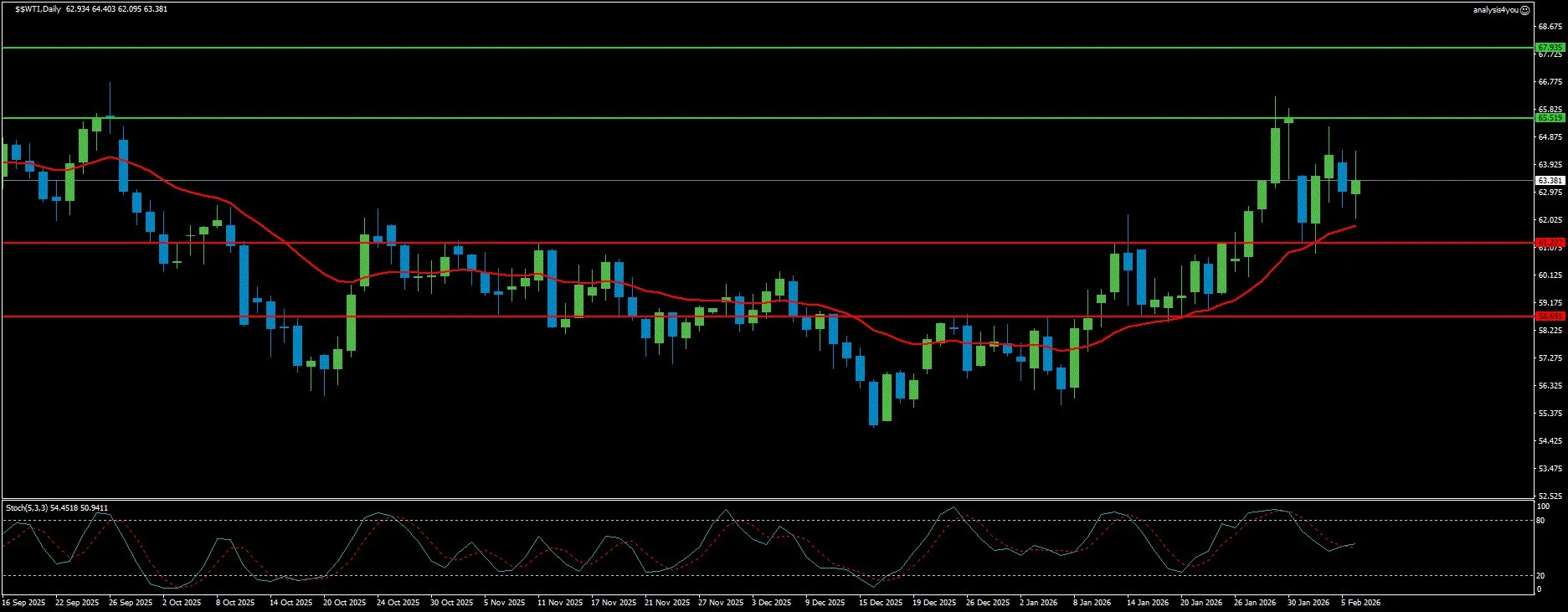
WTI crude held steady at 65.49 Friday after pulling back from highs near 70.00 on renewed US-Iran dialogue hopes. Trump’s special envoy Steve Witkoff met with Iranian officials Friday as tensions eased slightly, though a US aircraft shot down an Iranian drone that “aggressively approached” USS Abraham Lincoln Tuesday, keeping conflict risks elevated. Trump hosting separate talks with Israeli and Saudi defense officials in Washington on Iran strategy maintains hair-trigger conditions. Despite the pullback, oil posted its first monthly gain in six months—WTI up 12% (largest since July 2023) on January production disruptions in Kazakhstan, Russia, and Venezuela totaling 1.5M bpd, plus US Arctic weather cutting 340,000 bpd. Kazakhstan’s Tengiz oilfield is restarting after electrical fires. The price sits precariously at immediate resistance 65.52, with a break above 67.93 confirming renewed geopolitical premium, while support at 61.23 and 58.69 would signal genuine dialogue progress.
Resistance: 65.52 (immediate ceiling) | 67.93
Support: 61.23 | 58.69
Crypto
Bitcoin: Catastrophic Collapse to $60K Three-Year Lows (69,044)
Current Trend: Severely Bearish (Attempting Bounce) Market Sentiment: Extreme Fear
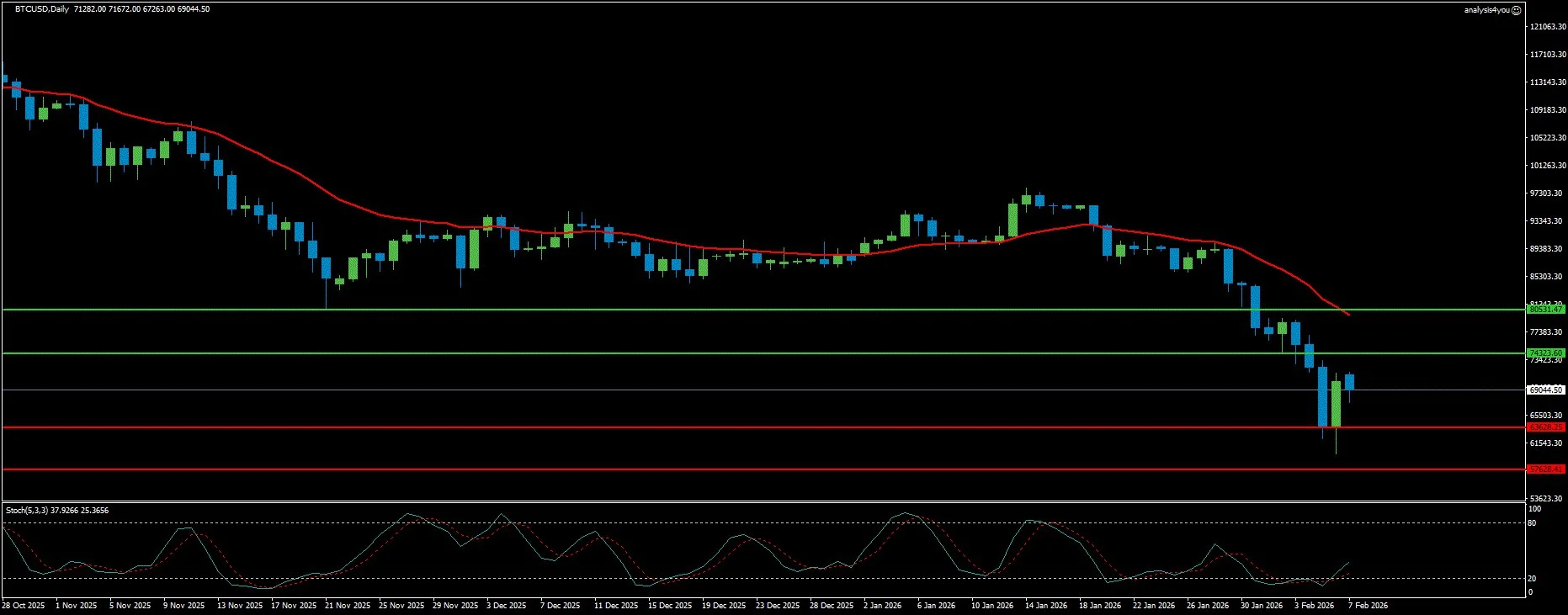
Bitcoin suffered a catastrophic collapse, touching $60,000 Friday—a three-year low not seen since October 2024 and more than 52% below the October 2025 all-time high of $126,199. The Crypto King posted three consecutive weekly losses exceeding 30%, with $4.85 billion in liquidations this week (90% long positions). Institutional demand evaporated with spot ETF outflows totaling $689M through Thursday—the third consecutive weekly withdrawal. Critically, compared to the same period last year when ETFs purchased 46,000 BTC net, they’ve been net sellers of 10,600 BTC in 2026—a 56,000 BTC demand gap. Bitcoin rebounded slightly to 69,044 Friday after CryptoQuant founder Ki Young noted the Coinbase Premium Index “spiked positive” at $60K, indicating whale accumulation and suggesting “plunge protection team just arrived.” However, multiple bearish factors persist: Fed’s lack of dovish guidance (Powell emphasized inflation “well above 2%”), weak US labor market (ADP +22K vs 48K expected), US-Iran tensions escalating (drone shootdown), and critically, Strategy’s Q4 disaster. MicroStrategy reported a $12.4B net loss for Q4, with MSTR stock cratering 77% from 2025 highs to $104.17 Thursday—erasing all post-election gains. Famous short-seller Michael Burry warned Bitcoin’s decline could trigger a “death spiral” among corporate holders, leaving Strategy “billions underwater” with BTC trading below its $76,052 average purchase price. Veteran trader Peter Brandt identified “campaign selling” patterns across eight consecutive days of lower highs/lows. Sentiment plunged to “extreme fear.” Stifel predicts potential drop to $38,000 based on historical cycles, citing tighter Fed policy, slowing regulation, shrinking liquidity, and heavy ETF outflows. Critical support at 63,628 is make-or-break, with 57,628 below potentially triggering full capitulation toward the 61.8% Fibonacci at $55,000.
Resistance: 74,323 | 80,531
Support: 63,628 | 57,628
Key Events This Week (February 9-13, 2026)
Critical Delayed US Data
-
Monday: Quiet calendar as markets digest government shutdown resolution
-
Tuesday: US Retail Sales (December), Employment Cost Index (quarterly), ECB President Lagarde speech
-
Wednesday: US Nonfarm Payrolls (January) – FINALLY RELEASED – Consensus 70K (vs 50K December)
-
Wednesday: US Unemployment Rate (January) – Expected to hold at 4.4%
-
Wednesday: JOLTS already reported (6.542M, down from 6.928M)
-
Friday: US Consumer Price Index (January) – Core CPI expected +0.3% MoM
-
Friday: Eurozone Q4 GDP (preliminary), BoE Chief Economist Huw Pill fireside chat
Central Bank Commentary
-
Sunday: BoE Governor Andrew Bailey appearance (critical after dovish 5-4 vote)
-
Tuesday: Wave of Fed and BoE officials speak
-
Week: Multiple central banker speeches from both sides of Atlantic
Geopolitical Flashpoints
-
Iran-US: Trump’s envoy Witkoff met Iranian officials Friday; separate talks with Israeli/Saudi defense officials in DC ongoing
-
Middle East: USS Abraham Lincoln carrier group in region; drone shootdown Tuesday escalated tensions
-
US Government: DHS funding expires February 13 without new agreement
-
Japan Election: Snap election weekend could impact Yen volatility Monday
Earnings & Corporate
-
Wednesday: Moderna Q4 earnings (Feb 13) – Expected EPS -$2.52 (vs -$2.60 consensus), +3.16% positive ESP
-
Wednesday: Illumina Q4 earnings (Feb 5) – Expected EPS $1.29, +2.25% positive ESP
-
Week: Multiple Fed policymaker speeches assessing Warsh nomination implications
Week Ahead Outlook
Wednesday’s delayed January NFP report represents the week’s critical flashpoint after the government shutdown created an unprecedented information vacuum. Markets expect 70K jobs added (vs 50K December), with unemployment steady at 4.4%. However, recent data paints an increasingly dim picture—ADP’s 22K private sector gain (vs 48K expected), JOLTS openings cratering to 6.542M, and Initial Claims spiking to 231K all suggest profound labor market weakening. A significant miss (sub-25K) combined with rising unemployment could force markets to price March rate cuts at 40%+ probability (currently just 23%), triggering Dollar weakness and potentially Gold rally toward $5,200+.
Friday’s January CPI holds equal importance for Fed trajectory. Core CPI expected at +0.3% MoM represents the critical figure—a print of 0.4%+ would support the Warsh hawk narrative and boost Dollar toward 98.25–99.09 resistance, while 0.2% or below would reinforce March cut expectations and pressure the Greenback toward 96.61 support.
The Dollar’s position at 97.35 reflects the “Warsh trade” optimism that his hawkish reputation will prevent aggressive easing despite his voting record favoring 100+ bps of cuts. This contradiction creates opportunity—weak NFP/CPI data would expose the narrative as premature, triggering sharp Dollar selling toward 95.73 and potentially retesting the 95.50 four-year lows. Conversely, strong data would validate the hawks, propelling USD through 98.25 resistance toward 99.09 and the 200-day SMA around 98.60.
EUR/USD’s consolidation at 1.1814 (from 1.2082 peak) looks like healthy profit-taking rather than reversal. The ECB’s dovish acknowledgment that stronger EUR could bring inflation below 2% suggests comfort with current levels, while the EU’s trade deals with India/Mercosur demonstrate strategic independence from US economic pressure. Support at 1.1688 should hold on minor Dollar strength, with 1.1577 as stronger floor. Weak US data would target 1.1918 resistance and potentially retest 1.2042.
GBP/USD faces the most precarious technical setup at 1.3608 after the dovish BoE bombshell. The 5-4 vote split (four members wanting immediate cuts) combined with Bailey’s Sunday appearance and Pill’s Friday fireside chat creates substantial downside risk toward 1.3421 support if they reinforce March cut expectations. However, the Golden Cross remains intact and weak US data could paradoxically support Sterling by confirming global easing cycle. Resistance at 1.3846 requires reclaiming to challenge 1.4012.
The Dow’s spectacular smash through 50,000 to 50,115 reflects the “great recalibration” from growth to value that multiple analysts anticipate continuing. Cyclicals like Caterpillar (+7%), Goldman (+4%), GE (+5%), and small-caps (Russell 2000 +3.6% Friday, +7% YTD) benefit from rotation ahead of Trump’s fiscal stimulus. The S&P 500 at 6,920 holding above 6,815 support suggests resilience, though the 0.1% weekly loss and failure to sustain above 7,000 shows fatigue. Resistance at 7,000-7,080 caps near-term upside. The Nasdaq’s 1.8% weekly loss despite Friday’s 2.18% bounce reflects tech sector stress from AI disruption fears, though software names showing signs of stabilization.
Amazon’s 5% crash on earnings miss and $200B capex guidance highlights AI investment ROI questions plaguing mega-cap tech. However, Friday’s chip rally (Nvidia +8%, AMD +8%) suggests investors differentiating between AI enablers (semiconductors) and potential disruption victims (traditional software). The 66 stocks hitting 52-week highs versus just 11 at lows demonstrates remarkable breadth supporting the bull case despite concentration concerns.
Gold’s recovery to 4,966 after touching $4,400 represents one of the most violent reversals in years. CME margin hikes and Silver’s 20% single-day plunge Thursday triggered deleveraging that cleared weak hands. Support at 4,668 should hold given the dovish BoE/ECB, US data uncertainty, Iran tensions, and the information vacuum. The $5,000 psychological level looms as immediate resistance, with 5,176 and 5,454 as extended targets. BNY’s Bob Savage noting $1B China ETF outflows highlights “fragile sentiment,” but historically such capitulation marks bottoms rather than beginnings of deeper corrections.
Bitcoin’s position at 69,044 after touching $60,000 represents the most critical juncture since the 2024 lows. The “plunge protection team” whale buying at $60K (evidenced by Coinbase Premium spike) suggests strong hands see value, but the fundamental backdrop remains brutally bearish. Strategy’s $12.4B Q4 loss and MSTR’s 77% collapse from highs demonstrate the “death spiral” Michael Burry warned about—corporate holders underwater, forced selling potential, and cascading liquidations. The 56,000 BTC demand gap versus last year (ETFs net sellers vs buyers) shows institutional appetite vanished. Support at 63,628 is make-or-break, with 57,628 below exposing the psychological $55,000 level and potentially Stifel’s $38,000 bear case target. Recovery requires decisive break above 74,323, which seems unlikely without major positive catalyst like US crypto regulation clarity or Fed pivot.
Oil at 65.49 reflects the market pricing 70% probability of “restrained actions” (Citi’s estimate) like tanker seizures versus 30% risk of broader Iran strikes. Friday’s Witkoff-Iran meeting and Trump’s dialogue comments ease immediate concerns, but the drone shootdown Tuesday and carrier group deployment demonstrate hair-trigger conditions. Support at 61.23 would signal genuine diplomatic progress, while break above 67.93 would confirm geopolitical premium rebuilding on escalation risks.
Risk management is paramount given the information vacuum, delayed critical data, extreme volatility across asset classes, and geopolitical uncertainty. Wednesday’s NFP and Friday’s CPI will provide the first hard data in weeks, creating potential for outsized moves as markets aggressively reprice Fed expectations. The Warsh nomination creates cross-currents—hawkish reputation versus dovish voting record—that data will ultimately resolve.


